
#1 plumbing company in Tallinn
Electric underfloor heating installation in Tallinn
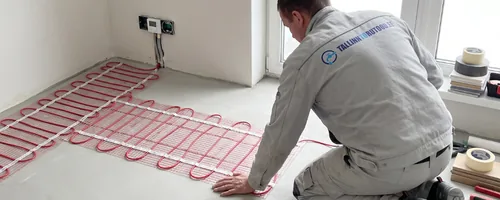
Tallinn Torutööd installs electric underfloor heating in the bathroom, toilet, hall and kitchen of apartments and detached houses in Tallinn and Harju County, and also looks for and repairs faults in existing heating mats. This is a underfloor heating installation and maintenance solution for rooms where the floor cannot be built higher: the heating mat fits into the 3 mm tile adhesive layer and heats the tile from below.
Before the offer, we ask for the dimensions and plan of the room, because the mat is selected according to the available floor space: a 780-watt heating mat goes into a 6 m² bathroom, which is connected to the floor sensor via a thermostat and a 30-milliamp residual current device.
- Open every day
- Licensed and insured
- 100% satisfaction guarantee
- The heating mat warms the tiles in 30 minutes
Request a quote for planned work
When to choose electric underfloor heating
The tiled floor feels cold in a warm room
In winter, the surface temperature of the bathroom tile of a prefab house is 19 degrees in 23-degree air, and the bare foot feels cold. The heating mat heats the surface of the tile to 28 degrees in 30 minutes, therefore the thermostat can be set to work only for morning and evening washing time.
The floor cannot be raised much
water-based underfloor heating with screeding requires 7 cm of floor height and a heating mat of 3 mm plus the thickness of the slab. In the bathroom, where there is less than 7 cm of free space under the door or the threshold is at the same level as the floor of the corridor, only an electric heating mat can fit under the underfloor heating.
The old heating mat has stopped working or trips a fuse
An hour after switching on, a cold floor, a sensor error code on the thermostat and a residual current device tripping when the mat is switched on mean a fault in the cable, sensor or thermostat. The multimeter gives the answer in 10 minutes: the resistance of a whole 780-watt mat is 67.8 ohms, the broken cable is infinite, and the reading of the floor sensor can be compared with the thermostat manufacturer's table.
Why the tile Feels Cold and Why the Heating Cable Burns Through
Ceramic tile conducts heat 8 times better than parquet: the tile's thermal conductivity is 1.3 W/(m·K), oak parquet 0.16 W/(m·K). Heat flows from the sole of the foot at 30 degrees to the slab at 21 degrees so quickly that the nerve endings signal the cold, and the room thermometer shows the same temperature on both floors at the same time. The heating mat reverses the direction of the heat flow: the resistance cable converts the electric current into heat, and the tile becomes warmer than the foot.
Each meter of the heating cable needs heat to escape through the tile into the room to provide the same power. Under a cabinet without legs, a pile of towels left on the floor or a carpet with a thick rubber base, heat accumulates around the cable, the insulation heats up above the permissible temperature, and moisture from the cracked coating reaches the copper conductor, which eventually burns out. Another reason is mechanical: a tiler's toothed trowel or later screw peels the cable sheath, and the damage doesn't show until weeks later, when moisture from the tile adhesive has reached the conductor.
How we install electric underfloor heating
Measure and choose the heating mat
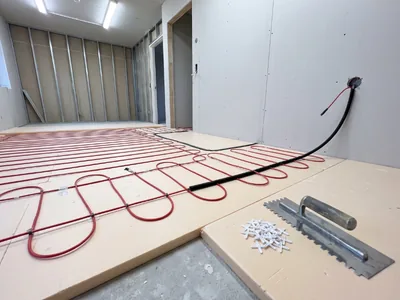
We measure the room and mark the bathtub, shower tray, toilet and floor-standing furniture on the plan; no heating mat goes beneath them. The cable cannot be shortened, although the mat’s mesh can be cut to turn it, so we order a mat sized to the free floor area. We also check the bathroom circuit’s 30 mA residual current device and add one if needed before connecting the mat.
Prepare the base and install the mat
We clean and prime the base, levelling hollows deeper than 3 mm so the cable sits evenly in the adhesive. We unroll the mat cable-side up and turn it so the cable stays 5 cm from the walls. The floor sensor sits in a sealed 16 mm flexible conduit between two cable loops, allowing it to be replaced later without lifting a tile.
Measure resistance and switch on for the first time
We measure resistance and insulation resistance three times: on the unrolled mat, inside the glue before tiling and after grouting. The resistance of the 780-watt mat must correspond to 67.8 ohms on the label, and the insulation resistance measured with a 500-volt megometer must be at least 20 megohms. We turn on the mat installed in the tile adhesive for the first time 7 days after grouting, the mat inside the screed 21 days after casting, and raise the temperature by 5 degrees per day.
Call now:
- Open every day
- Licensed and insured
- 100% satisfaction guarantee
Electrical panels and bathrooms in older apartment buildings
The original switchboard in the stairwell of Lasnamäe, Mustamäe and Õismäe apartments from the 1970s and 1980s has fuses and no residual current device. In a wet room, the heating cable can only work behind the 30-milliamp residual current device, so Tallinn Torutööd looks at the electrical panel already during the inspection and calculates whether the main protection of the apartment carries the additional current of the 780-watt mat at 3.4 amps with the electric stove and boiler. The mat is only installed in a protected circuit, because a cable operating under a wet floor without protection is dangerous even when perfectly heated. In 2025, an electrician added a new 30-milliamp residual current device to the 58 bathroom circuit before connecting the heating mat.
Electric underfloor heating prices and times
Heating mat installation starts at €27/m², so a 6 m² bathroom starts at €162, including thermostat installation; tiling is arranged separately. Replacing a thermostat and floor sensor starts at €64, and fault finding and repair at €52 per hour. A 6 m² mat takes four hours to install, with tiling possible the next day. Thermostat and sensor replacement takes 45 minutes; locating and repairing one circuit fault takes three hours. The call-out fee within Tallinn is €7.40. By the end of 2025, Tallinn Torutööd had installed 1,318 mats covering 8,172 m².
Heating Mat Sensor and Thermostat Replacement Near Maardu Gymnasium
Customer: Urve M., an apartment owner in Maardu who had a bathroom heating mat installed in 2019. property: Near Maardu High School, Maardu.
1. Resistance measurement: the thermostat showed a sensor error code and the floor was cold an hour after it was turned on; the multimeter gave an answer in 10 minutes, the resistance of the 780 watt mat was 67.8 ohms on the label, and the floor sensor reading was off the thermostat manufacturer's chart.
2. Shield check: The 30 milliamp residual current device for the bathroom circuit tripped at the test button.
3. Sensor replacement: The old sensor came out of the 16mm protective tube between the two cable loops, and the new sensor was pushed into the same place without opening any tiles.
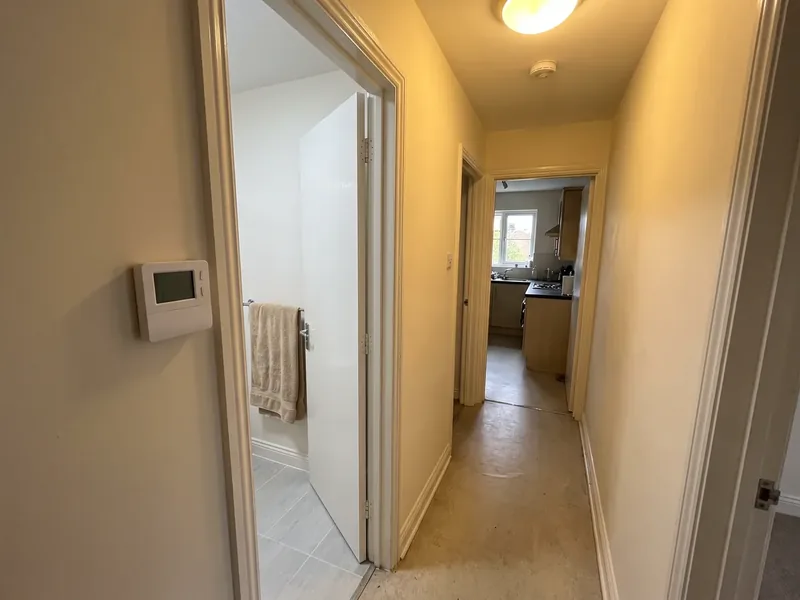
4. The first start: the new thermostat reads the temperature from the floor sensor, replaced the old one on the corridor wall next to the bathroom door at a height of 1.2 meters, and the surface of the tile reached 28 degrees in 30 minutes.
Invoice: Replacement of thermostat and floor sensor, 1 × €64; trip to Maardu, 1 × €22.68. Total €86.68 including VAT; thermostat and sensor are not included in the labor price.
Working time: 45 minutes, of which 10 minutes were spent on measurement (2026, handover report no. 56518).
Result: The sensor was replaced without breaking any tiles, and the bathroom floor is 28 degrees again in 30 minutes.
Frequently asked questions
Can heating mats go under laminate or parquet?
Yes, with an aluminum foil heating mat, which is a different mat than the tile adhesive. The foil mat distributes the heat evenly under the boards and jobs without glue, and the thermostat limits the floor temperature to 27 degrees, because a hotter floor dries out the wood joints.
How much electricity does bathroom underfloor heating use?
In winter, the 780-watt heating mat runs at full power for a total of 5 hours a day under thermostat control, which means it consumes 3.9 kilowatt-hours per day and 117 kilowatt-hours per month. At the price of 0.27 euros per kilowatt-hour, it is 31.59 euros per month, in summer the cost is lower, because the floor is also heated by the room air.
Can a damaged cable be repaired without lifting the whole floor?
The cable is repaired by opening 2 tiles: the fault location is found with a thermal camera and a cable finder so precisely that the rest of the floor remains untouched. The ends of the cable are connected to a repair sleeve, which is covered with a heat-shrinkable sleeve, the resistance is measured again before retiling, and only then new tiles are put in place of the two tiles.
Where is the underfloor heating thermostat installed?
Tallinn Torutööd installs the underfloor heating thermostat next to the bathroom door on the corridor wall where the shower water does not splash. The thermostat box comes at a height of 1.2 meters, where it is convenient to read the screen and where the floor washing water does not reach.